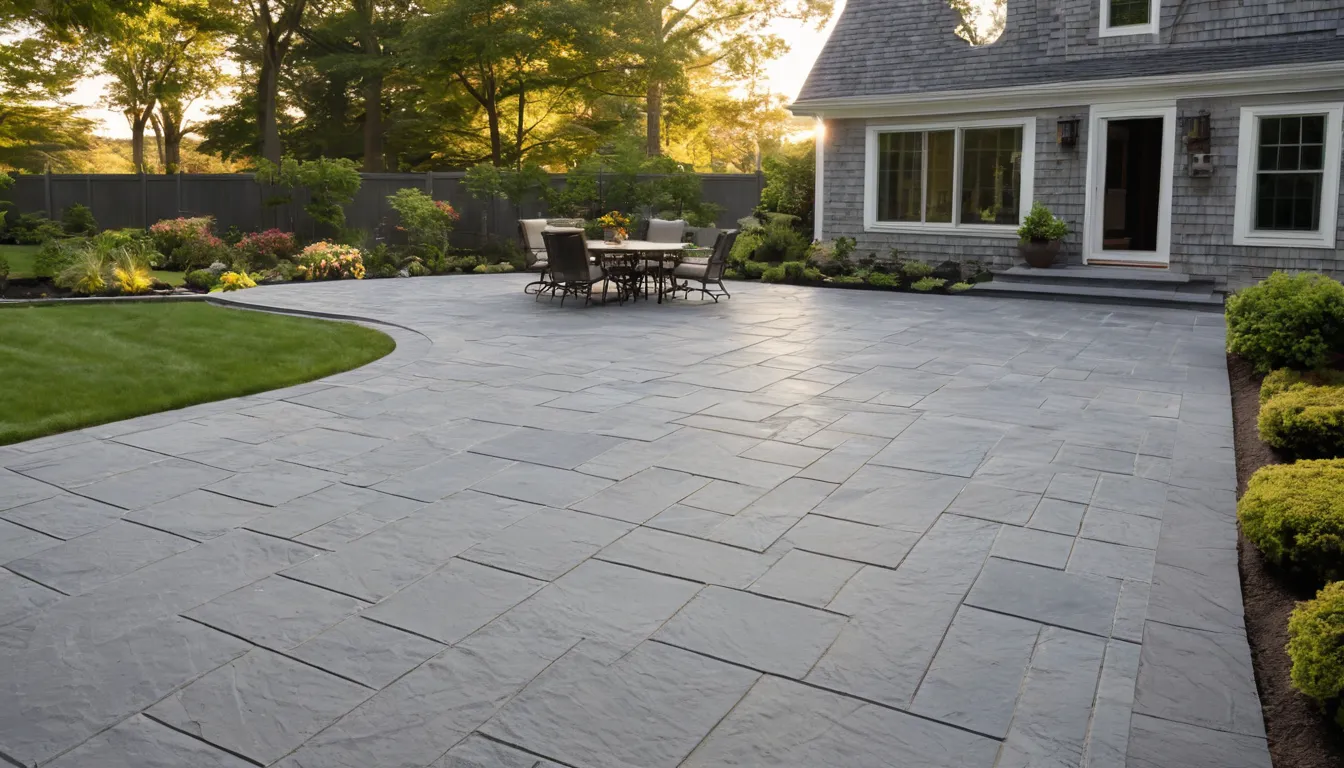
Residential Stamped Concrete for Your Home
A lot of people think stamped concrete is just painted gray slab. It is not. A provider pours the concrete, adds color, and presses a pattern into the surface while it is still soft. The result can look like slate, brick, or wood, with the strength of regular concrete.
Humanfollows Concrete is a referral service. We do not pour or stamp anything. We connect homeowners in Agawam Town and the Agawam Town area with independent local providers who do the work, set the scope, and give a written quote. If this is your first project, start with a simple request and ask your questions. This page covers the basics so you know what to expect.
Thinking About Stamped Concrete? Start Here
A lot of first-timers think stamped concrete is a fancy coating. In practice, it is real concrete with a pattern pressed into the top while it is still soft. Color goes in with it. The look is part of the slab.
This page is about new work. If you need concrete driveway repair instead, that is a different kind of request. Here, we stick to new stamped surfaces and the basics a beginner should know.
Myth: Concrete Can Go Down Any Time of Year
Many people believe a pour can happen whenever they are ready. In cold, snowy areas, the weather decides. Concrete needs mild temperatures to cure well. Providers often book up once spring arrives, so asking early gives you more choices.
What Cold Weather Does to New Concrete
Fresh concrete that gets hit by hard frost can end up weak or flaky on top. Later, melting snow soaks in, then turns to ice again, and that cycle can wear on a surface that was not sealed well. A good provider plans around this. Ask how they handle the season.
How Stamped Concrete Is Made
The process has a few clear parts. None of it is magic, and knowing the order helps you follow along.
Step One: A Firm Base
The ground is dug out and leveled. Gravel is packed down so the slab does not sink or shift. This hidden step matters more than the pattern on top.
Step Two: Color and Pattern
Color is mixed into the concrete or dusted on the surface. Then the installers press rubber mats into the soft slab. The mats leave the texture of stone, brick, or wood. A release powder keeps the mats from sticking, and it adds subtle shading.
Step Three: Cleaning and Sealing
After the slab hardens, the extra powder is washed off. Then a sealer goes on. The sealer protects color, helps repel water, and gives the surface its finish, from soft matte to glossy.
Popular Patterns and Colors
Common picks include ashlar slate, random stone, brick, cobblestone, and wood plank. Colors range from warm tan and soft gray to deep charcoal and earthy brown. Many homeowners choose a main color with a darker accent for depth.
Myth: It All Looks Fake
Some people picture a flat, repeated stamp. Skilled providers use several mats, vary the angles, and add shading by hand. Up close you can tell it is concrete. From the yard, it reads as a stone patio.
Where Stamped Concrete Works Well
Patios are the favorite spot. Stamped concrete patios also suit walkways, pool decks, steps, and porch landings. Wide open areas let the pattern show clearly. Very tight spaces can be harder to stamp cleanly.
A Word About Older Homes
Older houses with stone or block foundations often have uneven soil, drainage quirks, and old slabs that have settled. If you see cracks in a wall or a sinking corner, talk to a foundation repair provider first. A new patio should not go over a problem that is still moving.
Stamped Concrete vs. Pavers
People often say pavers are always the better choice. Not quite. Pavers are individual pieces, so one can be lifted and replaced. They can shift over time, and weeds may grow between them.
Stamped concrete is one continuous surface. It has fewer joints and is easy to sweep. It can crack, though, and a patch may not match perfectly. Neither choice wins every time. Your budget, soil, and taste decide it.
How Long the Job Takes
Most small patios take a few days of active work. That includes digging, forming, pouring, and stamping. Then the concrete needs time to cure before heavy use. Sealing usually comes after the slab has dried enough. Larger layouts or tricky yards can add time. Your provider will give a schedule with the quote.
Caring for Stamped Concrete
Care is simple. Sweep often, rinse with water, and use mild soap for stains. Shovel snow with a plastic blade and skip harsh de-icing products unless your provider says they are fine.
Myth: Sealer Lasts Forever
Sealer wears down from sun, foot traffic, and winter. Many providers suggest resealing every few years. When the color looks dull or water stops beading, it is time to ask about it.
Choosing a Stamped Concrete Provider
Look for someone who explains things in plain words and puts the scope in writing. Ask to see photos of past stamped work. A solid provider will not rush you.
Questions Worth Asking
- How will the base be prepared for my soil?
- Which patterns and colors can I see in person?
- Where will control joints go?
- Which sealer is used, and how often should I reseal?
- What is the schedule, and what does the written quote include?
Request a callback to check provider availability and share what you have in mind.
What's Included
Base Prep
Digging, gravel, and leveling so the slab sits on firm ground.
Color and Pattern Choice
Pick from stone, brick, or wood looks with shading that fits your home.
Pouring and Stamping
The provider places the concrete, adds color, and presses the pattern in.
Sealing and Cleanup
A protective sealer goes on and the site is cleaned when work wraps up.
Typical Stamped Concrete Costs
Prices vary by size, pattern, soil, and region. These are typical U.S. ranges only. A local provider can look at your yard and give you a written quote with the full scope.
| Item | Typical range | Notes |
|---|---|---|
| Basic stamped slab | $8 – $18 per sq ft | One color and a simple pattern |
| Multi-color stamped slab | $12 – $25 per sq ft | Accent colors and hand shading |
| Small patio (about 200 sq ft) | $2,500 – $6,000 | Depends on pattern and prep |
| Large patio (about 400 sq ft) | $5,000 – $12,000 | Extra size may lower the per-foot price |
| Stamped walkway | $3,000 – $8,000 | Length and curves change the price |
| Old slab removal and extra prep | $2 – $6 per sq ft | Needed if a worn slab is in the way |
How It Works
Share Your Idea
Tell us the space, the look you like, and when you hope to start.
Get Connected
We refer you to an independent local provider in our network.
Review the Written Quote
The provider checks the site and sets the scope, schedule, and price in writing.
Decide at Your Pace
Compare, ask questions, and choose only if the plan feels right.
Why Call Humanfollows Concrete
Talk to a Real Provider
Skip hours of searching and speak with an independent local concrete provider.
Plain Words
Basics are explained simply, so first-timers know what to ask.
Local Know-How
Providers in our network understand cold winters, frost, and older homes nearby.
No Pressure
Start with a simple request. Written quotes come from the provider, with no obligation.
Other Services
Need residential stamped concrete in Agawam Town?
Planning a new driveway or patio? Request a callback to check provider availability, or send a few lines about your project and request an estimate.
No obligationResidential Stamped Concrete FAQ
Is stamped concrete as strong as regular concrete?
Yes, it is regular concrete with color and a pressed pattern on top. Strength depends on the base, thickness, and mix. Ask the provider how the slab will be built for your soil and winters.
How often does stamped concrete need to be resealed?
Many providers suggest resealing every two to three years, though it depends on sun, foot traffic, and winter wear. If the color looks dull or water no longer beads up, ask your provider about resealing. Follow their advice for your sealer.
Does stamped concrete crack?
Any concrete can crack. Providers place control joints to guide where it happens, and a good base helps too. Small hairline cracks may still show up over time, so ask how your provider plans for it.
Request a callback
Planning a new driveway or patio? Request a callback to check provider availability, or send a few lines about your project and request an estimate.
No obligation